New Contact
What Alyssa Liu, Punch, and exclusion have to teach us about what it means to grow up (feat. that one time Taylor Tomlinson asked me about being a parent)

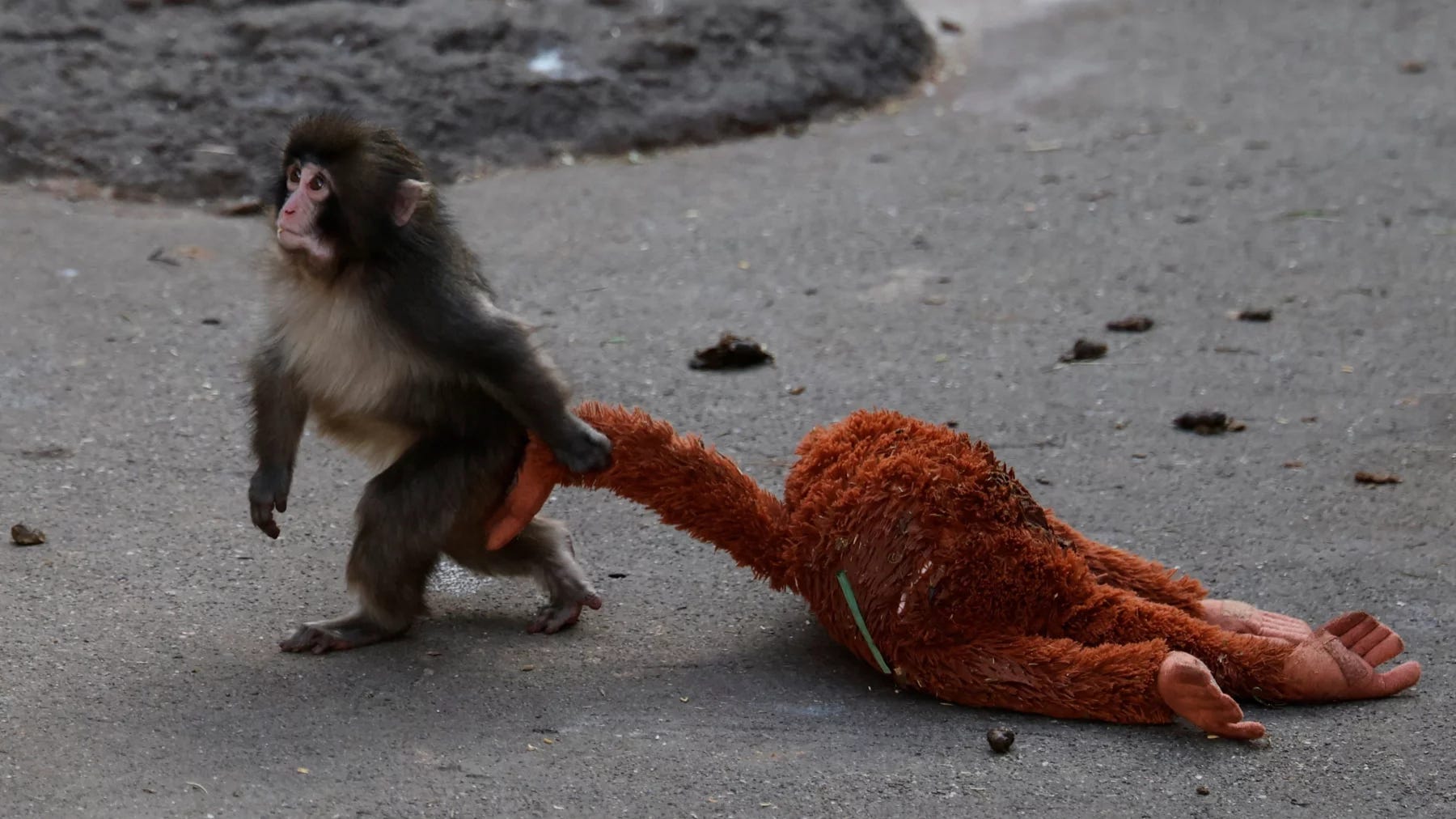
Two stories buzz with energy and movement. The effortless flow of Alyssa Liu spinning across the Olympic rings on her knees, clips from the Ichikawa Zoo of a little monkey named Punch dragging a larger stuffed one across his enclosure. Both figures are alone in these moments and captured our attention. We love a comeback kid and an outsider’s grit. They make us feel reclamation is possible and that effort is worth it even if nobody’s watching.
Alyssa’s performance shows an athlete at the pinnacle of success for her sport and as the audience we can sense her ease and delight. She describes skating as her art and we imagine the possibility of finding a presence with ourselves doing what we love that enlivens us and all who witness. While ambition and competition typically signal anxiety, stress, heartbreak, and tension, seeing her embodiment on ice has us captivated beyond her skill and precision.
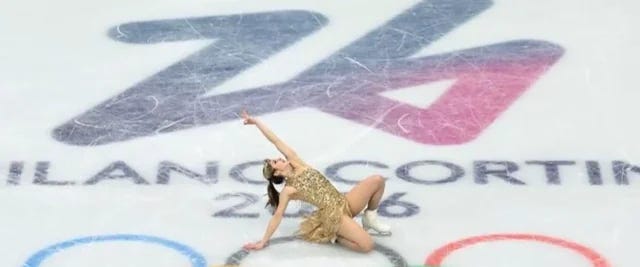
Liu’s story challenges us to consider what if we realized we loved something we left and what would it mean to choose it again as our own? Growing up she was conditioned and controlled to optimize her performance, becoming the youngest US champion at 13, then retired at 16. She said no—until in 2025 when she said yes and returned to skating because she wanted to. Begging the question, are there things we’ve shut out from ourselves asking us to listen again? And if we do what might be possible? While the answers to this are our own, the agency and ownership Alyssa has of her presence on and off ice shows a woman who belongs to herself in such a way we can’t help but feel invited too.
Cross a continent and a sliver of ocean from the Olympic rink we find a different setting and circumstance. Rather than winning, by all accounts Punch appeared to be losing. In being unchosen, he captured an audience he will never know. It’s something of a paradox that the belonging he sought was held in our social media feeds. Punch’s resilience is inspirational yes, but his exclusion is the only reason he grabbed our attention. His experience—seen and felt without a need for words—highlights something in us we all know. While we were hoping for him to be accepted by his own, the moment he is he will fade from our view in a particular way, like a childhood stuffed animal we don’t remember anymore.
During my three years in crisis mental health, the concept of the inner child came up in process and discussion frequently. As a clinician, my approach seeks to attend to the childhood wounds hidden underneath the things we suffer day to day. These are the places in us excluded from view and conscious thought. We want to fix our problems right now and figure shit out so we can thrive! Who wants to go to the moments in our past where we were hurt? Won’t the pain be too much? What if it feels like a waste of time? Besides, will that little kid inside us ever have enough to stop hurting? Pop psychology has lots to say about healing your inner child and reparenting yourself. Trouble is, there’s a catch 22 in this because a) we need to be with ourselves in these tender inner feelings as they are and b) we learn this by someone being there with us first. Except most of us didn’t have that someone, so…we’re lowkey f*cked.
Part of the reason I wrote my book HTBABF was to attempt to describe what happens when you don’t find your people, when there is no one there, and how to risk again when we can’t even see through the pain of rejection. These kinds of places are ones where—despite best intentions—maps cannot be made, your only hope through is to be found by a person you can trust in the dark.
What would we give to heal our inner child? Lots of us find ways to celebrate, play, listen, and honor these little parts of ourselves. The phrase “be who you needed when you were younger” comes to mind. Except what we don’t seem to notice is that kid had to be that already—because someone else wasn’t. Our parents who claim they were doing the best they could actually needs to be acknowledged as not enough. And even if we brave this truth for ourselves we keep encountering in our 20’s, 30’s, 40’s and beyond we just how much they did not pick up the tab.
Here’s the rub, when we spend time with our inner child, without addressing the parental wounds, the story becomes an escalation of needs, pain, and grief with nowhere for this to be held unless we have a parent there too. Basically it’s like putting Punch out without his stuffed animal, Alyssa back on the ice rink controlled, or worse yet never getting back out there at all. To approach the inner child but not address the internal parent we inherited leaves us feeling like an open wound…still confused and not understanding why, haunted by the question of what is wrong with us and why can’t we heal?
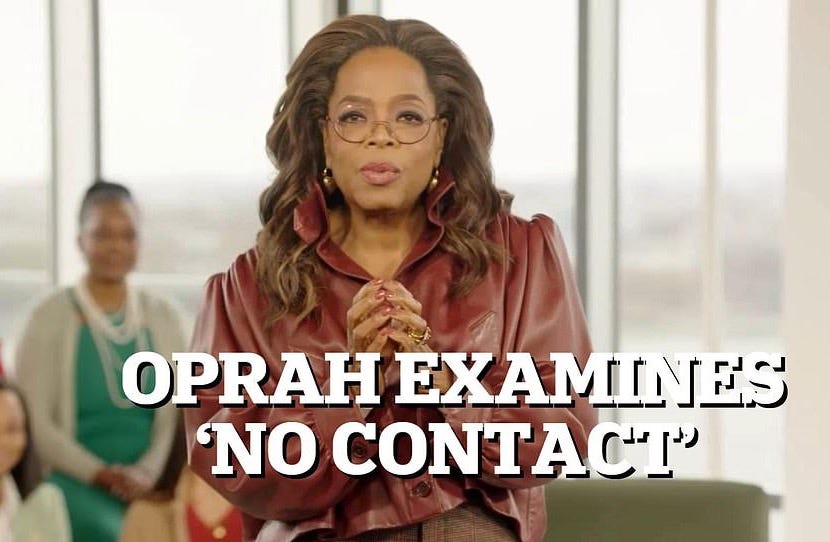
Oprah’s been talking to therapists and individuals about going no contact with family and between me and my orphaned adult friends we are more than annoyed. The conversation swirls as a weird “should-they-shouldn’t-they” with reactive caveats and underlying anxieties from clinicians and interviewees alike. This creates an open season for everyone to have an opinion on what is honestly one of the more heartbreaking questions an adult can find themselves asking in this life.
If you don’t mind me saying, the emotional swirl of the above sounds a lot like the kind of parenting most of us probably had—at best. The should or shouldn’t, consequences or lack thereof, guilt blended with shame, all to the whim (or trend) of the moment that used positions of authority to cover for any mistakes.
There is a spectrum of abuse including harm, neglect, or control and the mind has a powerful ability to rationalize behavior. While this is the case for far too many—at minimum, most of us were raised by parents who were not ready to parent.
If we’re honest (and also parents) the same is true for us. But here we are trying outpace the pain with “reparenting” ourselves with visions of a mother and father we never actually had. Because, when the adults who were supposed to nurture us did something else, to look our internal mother and father in the face is the stuff of nightmares.
Most of us are no contact with the reality of who the inner parent is in us and whether we go no contact or not IRL we are seeking contact with a younger part of ourselves and assume this is why Punch and Alyssa resonate with us so much. They did it! Despite all odds! Look, here’s somebody who figured it out!
But what if these two stories aren’t actually about the inner child at all?
In an interview Alyssa was asked what she would say to her younger self and she replies “Nothing, she’s got it”
For a girl who grew up being told everything of what to do, eat, wear, be, and become, the power of her reply reveals the presence of a different kind of parent in herself.
Punch’s Ikea stuffed monkey sold out in days. Maybe more of us are seeing we need to reach for an inner parent to care for our inner child. We know it when we see it in these stories, because we’ve been searching for what it feels like. And rather than looking outside us for more data on how to heal, we need a new internal parent within. We need to grow up.
This is a concept encountered often in sessions as clients process critical, controlling, bullying, and cruel parts of themselves. These voices are usually echoes of what they heard from a mother or father who taught them “this is who you are and how you have to show up.” It’s painful to listen to and recognize in us. We can ignore our inner father disguised as an inner critic. We can dismiss our inner mother masked as anxiety. Because to see how the lives of those we don’t want to repeat live on in us can be overwhelming and for a long time it is heartbreaking.
If you resonate with what I’m saying here for yourself, notice the next time you process-in therapy, with a friend, alone. There will be a moment of pause in the pain where you’ll take a deep breath—catching and calming yourself from the emotional storm that’s just passed. Such an exhale is a form of nurture. A holding of ourselves and a listening to a need. A mother, a father, just sitting with a child while they both breathe. This is one way to recognize the presence of a new internal parent and nourish your own growth.
I reflect on this often too and lately I’ve been asking new questions when I find myself dragging my parentified inner mother across the floor unable to take a breath. Instead of thinking “what does my inner child need?” I look around and wonder “what did my mother need to offer herself so that she could parent me?” And then I listen and do that thing…because I have a hunch I probably need it too.
This knowing is different than the kind of things a younger version of us knows. And, by going no contact (in reality or our unconscious) all our little hearts are left with is the memory and residue of how and what went wrong. These are terrible things to feel alone. Without a good enough inner parent, such depression and numbness can spiral into despair. The feelings you’ve already known as a child manifest in your bones pushing you down and out of your own life into a place where you fear no one can reach you.
The question itself of finding a different parent can feel too big. Alyssa Liu is a once in a lifetime success story, Punch is a primate with less existential dread. How on earth could we even hope to believe this possibility in us? And even if we did, won’t the grief swallow our hearts whole when seeing a mother be patient with a screaming toddler in a grocery store is enough to send us running if we don’t burst into tears first?
This is why we exclude-not the little parts pain-but the bigger bully we don’t know what to do with and in this internal contention and confusion we feel humiliated not knowing what to do with ourselves.
To understand our inner parents will bring different answers and challenges in contrast to sitting with the feelings of a childlike place. It may not feel real, especially as the resident versions of our father and mother look on at our attempts like the other monkeys at a zoo. Watching Punch try to make friends and getting punched down or failing to pull himself back into hiding in a cement block without his surrogate mother in tow. Their control lies in looking on and doing nothing that improves the outcome.
This brings us to the need for a different kind of exclusion. One that is necessary. For as much as we praise, want, or proclaim the need for belonging—we don’t see how we exclude exclusion in the process. The answer is not always an antithetical antidote. For the formation of our inner parent it also requires our courage to look with a new perspective that tells the old one to back off. What is the truth of how we’re reparenting ourselves in ways no different than the ones who got us here in the first place?
What do you neglect to do for you that your mother also neglected for herself? What do you invalidate in yourself that your father avoided about himself?
I was lucky enough to get tickets at Comedy Works when Taylor Tomlinson was working the material that is now the recent Netflix Special “Prodigal Daughter” and even luckier (but in truth terrified) to be seated in the front row. If you’ve watched it, the part where she gets to asking who is a mom and then if they pooped during childbirth—the question prior starts with how many kids did they have.
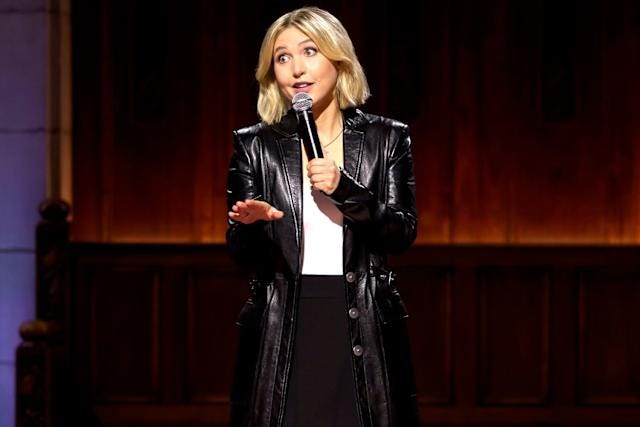
When she got to this question in the set she asked me. I said four and unsurprisingly she had a few additional follow ups. It’s always a shock because I do not look old enough (because I’m not) but from one religious trauma girlie to another she knew I was the type. She asked me about how long I was in church before I left, interacted with how old my kids were at the time and then asked who falls through the cracks (it’s the oldest). I answered all these easily enough and then she turned back for one final question: “Now, I don’t want to sound like an asshole for asking this—but is being a parent…embarrassing?”
To this day I do not know what came over me but I replied without missing a beat:
“That depends on how much shame you’re able to bear based on how other people perceive your children.”
She bent over and took a deep breath and then stood, looked me in the eyes and repeated me word for word into the microphone. The room gasped.
Then she said “Dang! I thought you were just gonna say you pooped on the table!” I laughed saying, “Oh I did that too.”
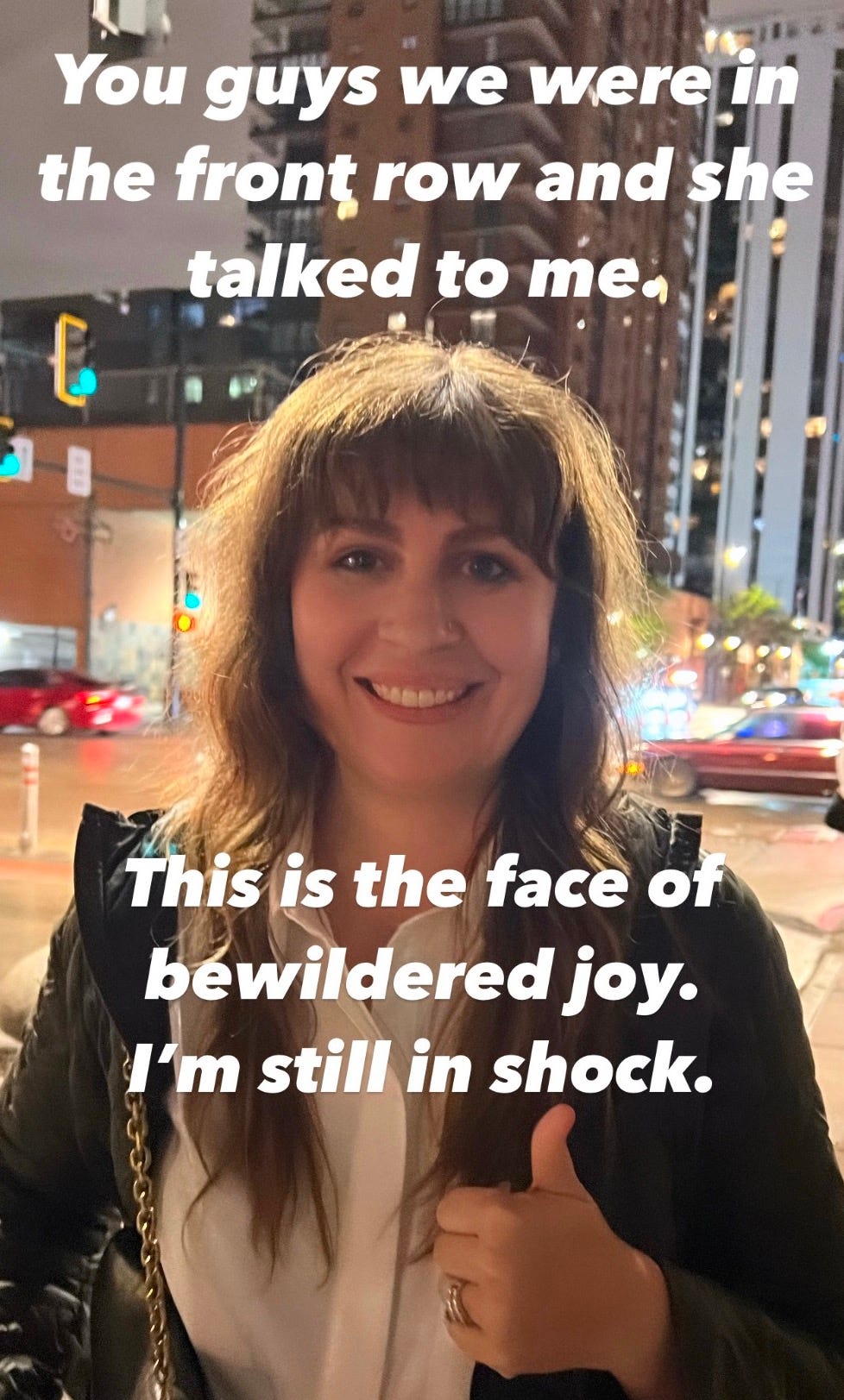
And that was that. I’m still starstruck by the interaction and my own response, as shown here.
What it means to be a parent is not so different from what it means to parent ourselves. Are we willing to acknowledge and eventually face the cruel inner parents in us?
The more I think about what I said to Taylor Tomlinson, and stories like Punch and Alyssa Liu…the more I believe the kind of change we are looking for is less about healing the inner child and more about growing an inner parent with the courage to face our shame.
Because our growth does depend on how much shame we are able to bear based on how our parents perceived us as children. Including the parents they cultivated in us.
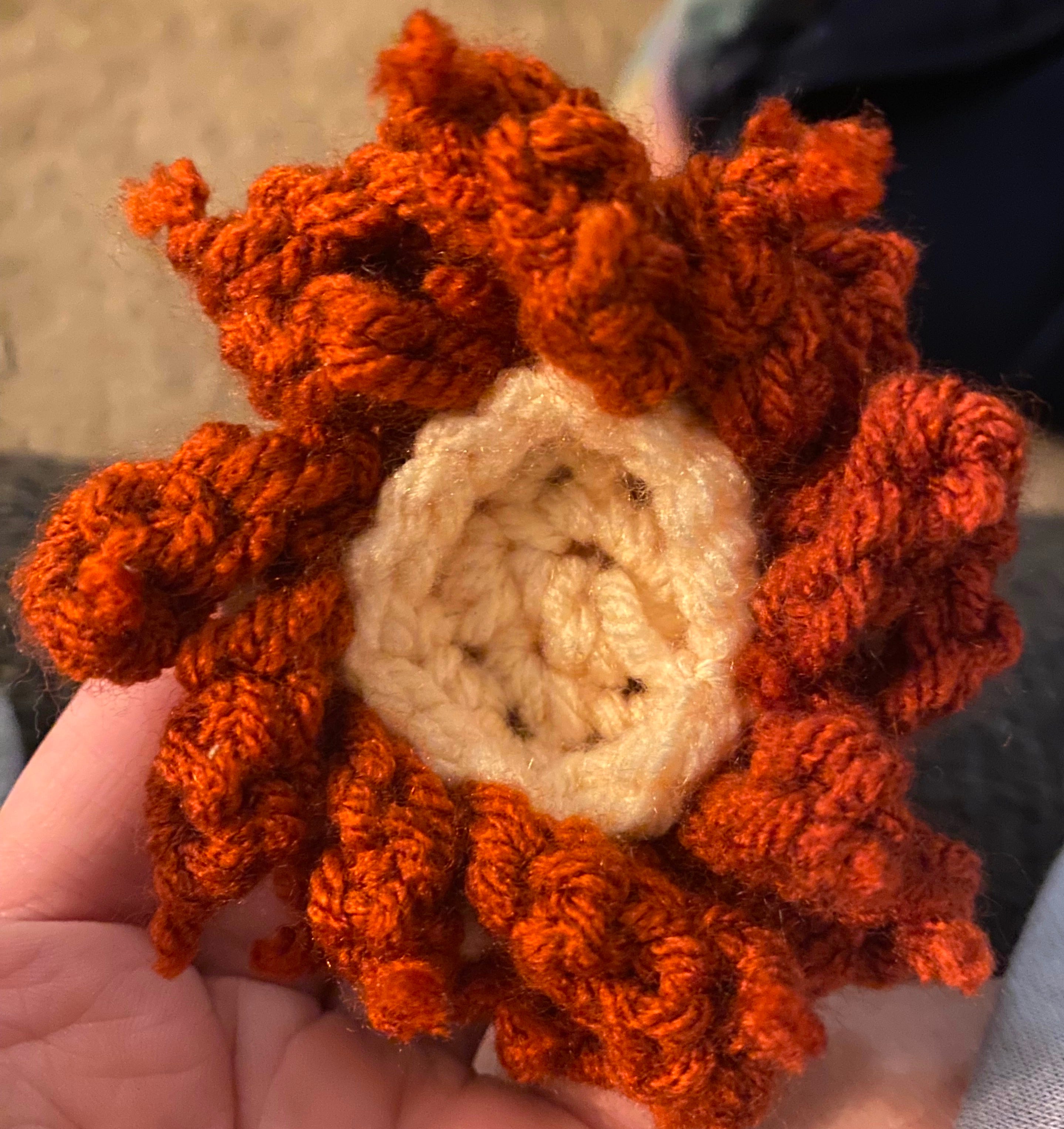
In my own children I see pieces of myself that my parents wanted or shamed, things I will never return to or things I deeply wanted. My daughter crochets, my youngest makes herself smoothies, my eldest prefers his classical music, and my son plays violin. Their encounter with themselves and my responsibility to facilitate it (mostly by clearing myself out of the way) help me see where I can return—like Alyssa, and what I must hold onto—like Punch, to help me along the way.
You too, whether you have your own children, have a need to parent yourself. And it is held in the way you will turn toward the places that you have excluded in you, your “box of darkness”1 as Mary Oliver might call it. She also asks us: “Tell me, what is it you plan to do with your one wild and precious life?”2 What a beautiful question. The kind that helps us learn to ask better ones for ourselves and cut through the noise.
“What will you give your inner child?” the Instagram post asks you. “What connection should someone have with their parents?” Oprah asked them.
What will you do with your internal parents? How do they live in you? We must ask ourselves.
“Is it embarrassing to be a parent?” Taylor asked me.
Were my parents embarrassed of me? We are scared to know for ourselves.
How much are we able to hold? Were we seen or shamed? Will we see or shame?
Alyssa Liu spins arms outstretched on her knees across the ice she chose to return to. Punch has let go of what was mother enough and found his own love to embrace. Both are in a dance that moves from exclusion, return. Same, different. Self, other. Parent, child.
No contact. Contact.
You can feel it now. Something new.
Mary Oliver, “The Uses of Sorrow,” in Thirst (Boston: Beacon Press, 2006), 52.
Mary Oliver, “The Summer Day,” in Devotions: The Selected Poems of Mary Oliver (New York: Penguin Press, 2017), 316.
Punch's journey from beung an outcast to being found was a really magical one. Bullying is something we all have to deal with. For some of us our family of origins encourage that divide. Coming to terms with that is heart wrenching. Moreover it is certainly not automatic that we will ever come to a resolution. Given that dichotomy is it any wonder bullying is such a major issue in so many settings. Having the knowledge where that imprinting occurred is so essential.